
There’s a tiny, disk-sized patch of snow behind the museum where I work, a reminder that winter wasn’t all that long ago. I keep waiting for it to melt, but it refuses, so I ignore it and remember that its water’s going to water the grass it’s hiding. In defiance, some crocuses finally gathered the gumption to bloom – a month late – and later the daffodils joined in.
Ah, spring!
But if that snow didn’t want to release its chilly grip on Earth, all I had to do was look up and see the spring sky greet me. Clouds are the only impediment to these yearly harbingers of warmer times.
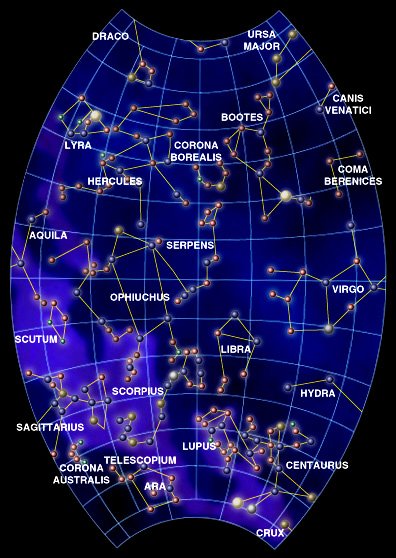
I’ve got a few favs I eagerly look for when the days begin to lengthen. When Leo starts strutting up that heavenly hill come February, spring isn’t far behind.
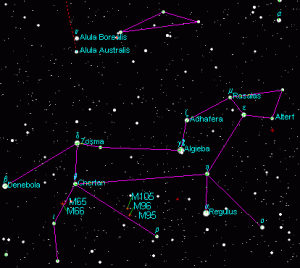
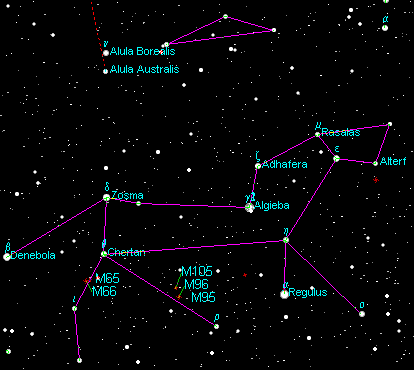
There’s no mistaking him. He’s got a jewel on one foot, Regulus, magnitude 1.4, and sports another in his tail, Denebola, a bright second-magnitude (2.14) star. He leads the parade for my next favorite grouping:
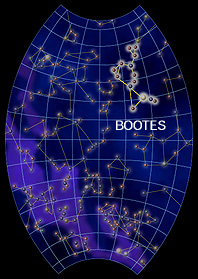
Bootes, the Herdsman. You can’t mistake him either, although he’s so large it’ll might take a little patience to find him. His main-feature star, Arcturus, lights up his lap. He’s sitting down, smoking his pipe, wondering how all those sheep he was supposed to watch disappeared (perhaps Leo ate them?).
Or maybe he’s just trying to hide that hunk of bling behind him, the Northern Crown, or Corona Borealis. It has a second-magnitude star, Gemma, actually a binary star, or two stars rotating around each other. Its magnitude shifts from 2.21 to 2.32, not very noticeable with the unaided eye. You’d need seventeen straight days to stare up at it with a telescope to measure the change.
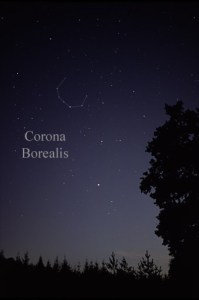
Credit: Till Credner (Own work: AlltheSky.com)
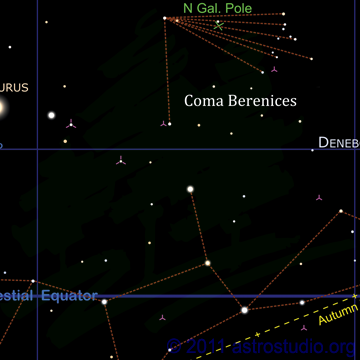
We all know how lions pride themselves on their gorgeous manes. Bootes must share the same sentiment, because between him and Leo, there’s a fantastic group of very faint stars known as Berenice’s Hair.
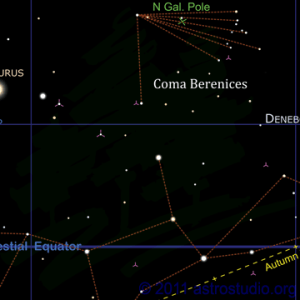

It’s small, but that doesn’t make it special! There are eight galaxies within it, several globular clusters, 200 variable stars in its region and if that weren’t enough, the North Galactic Pole is amidst her strands. But wait! There’s more! She gets all twinkly and festive during the Christmas season. Bragging her own meteor showers during December and January, she peaks from December 18-25, right in time for the holidays. It’s also important, when looking at her, not to expect to spot the Milky Way. When her hair is high in the sky, the Milky Way is lower in the sky, on or near the horizon.
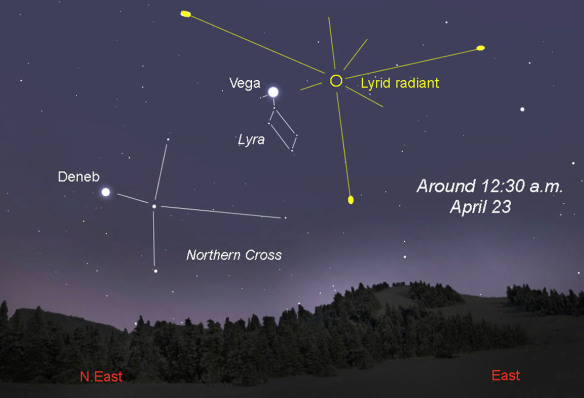
And speaking of meteor showers, in mornings you’ll find the Lyrids, or meteor showers occurring near the constellation Lyra. Those occur at the end of April, peaking between April 22-25. The radiant is where to look; the meteors seem to be originating from that point.

Credit: astrobob.areavoices.com
Now, get off that couch, stop texting, get outside and go have yourselves a great look at the nighttime sky!
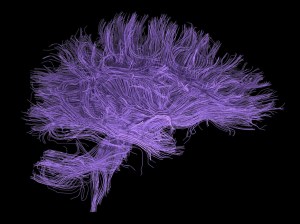
Credit: Brain Art Posted on Flickr
If only.
If only there had been a substitute pilot, perhaps one of artificial origin, perhaps the passengers flying that day on Germanwings might’ve experienced an eventless flight.
If only artificial intelligence was just like those robots in those movies, they’d come to the rescue.
Which of the above sentences are true?
Well, in theory, all of them.
Presently, the airline industry is investing in planes operated by either robots or remote operators. Not exactly drones, these alternatives to flesh-and-blood pilots are being designed to work alongside a pilot or, in some instances, instead of one. As it is, the technology is already present in F-16 fighter jets and is credited with saving the life of an American pilot during a battle with Islamic State forces. Airbus uses software that guides the pilots and only seven minutes of the pilot’s time is required to manually fly the plane. Had there been either software or some sort of AI present in the cabin of the ill-fated Germanwings plane, perhaps things might have turned out differently.
But is this an example of AI? Not in the purest sense, but it’s a step in the right direction. Software is making decisions to operate a plane in a specific manner – keeping it aloft – and as such, is preventing tragedy.
With this weekend’s premiere of Ex Machina, a new kind of more complex, believable robot makes its premiere. True, it’s more about the character of the Ava, the new artificial life form. But then again, Steven Spielberg already explored such a concept with his 2001 film, A.I. Artificial Intelligence. Or, why not consider I, Robot – either the film or the masterful Issac Asimov short-story series upon which it’s based? Heck, right now I’m reading his Caves of Steel and it tells the story of a humanlike robot passing for a detective.
One can correctly argue that true artificial intelligence is the result of a manufactured being (i.e. robot/android) thinking and feeling and dreaming and wishing, like Bicentennial Man. And yes, Robin Williams’ character Andrew did, in fact, evolve to close as human as one can get, but he had the benefit of multiple upgrade surgeries to accomplish his goal. But someone had to put that notion in that circuited brain first, right? So instead of God, man becomes His substitute and creates an artificial version of what He rendered.
Now, here’s something to consider: if artificial intelligence is dependent upon its creator, then will the created be only as smart as the person who coded it? What exactly is embedded in that code to get that ‘bot a-thinkin’? Will it reflect the coder’s own limited pool of experiences, or will the code be such that it takes on a life of its own via nano-sperm and ovaries, replicating its own Matrix-y ilk?
Ponder that one and see what your brain comes up with – artificial or not.

Yours truly indicating future site of Starfleet Academy
Okay, so they haven’t even broken ground yet, much less found Vulcans with whom to work, but right behind me is the spot where, in 2161, The United Federation of Planets is going to set up shop and create a Starfleet Academy.
And just exactly what was I doing in San Francisco? Not casing out potential academy spots, for the future or other purposes. No, I accompanied my husband on a business trip and then we had ourselves a much-needed break.

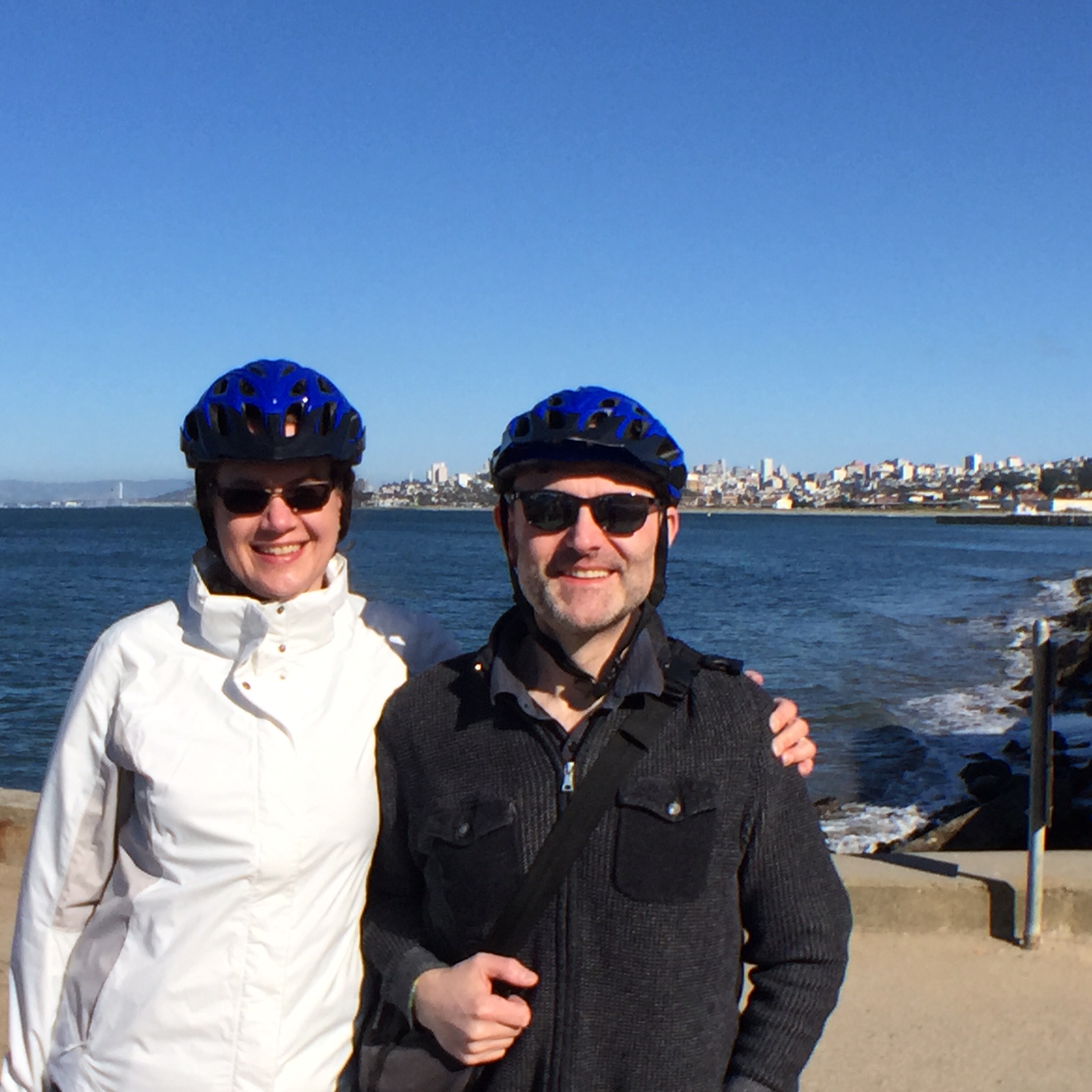
Gretchen and Andrew obscuring an otherwise excellent view of San Francisco, sporting bike helmets
Andrew’s superior officer in command, a wonderfully generous and kind person, offered to guide us out-of-towners on a bike ride from Fisherman’s Wharf to Sausalito, a distance of roughly 8-10 miles, or 13-16 kilometers. As you can see, it was a gorgeous day, a bit breezy perhaps but fine enough to hop aboard our trusty rented bikes and fly like the wind over the Golden Gate Bridge.
Did I mention wind? At some points in the trip, gale-worthy gusts puffed up our jackets and nearly knocked us loose from our seats, but that only added to the excitement. As I chugged up the occasional hills leading to the bike-riding side of the GGB, I reminded myself that my endeavor paled in comparison to those future cadets intrepidly charging forward on into space. Tucked away in the back of my mind lurked the possibility of THE ONE, you know, that ginormous earth-sinking quake just waiting for the right moment to unleash its wrath. You laugh? My first trip to California (Los Angeles, that time) was punctuated by a 6.0 earthquake, forever imprinting in my mind it could happen again.
Shoving that nasty thought away, I turned onto the bike lane and wheeled my way across this legendary span. About halfway across, I turned my head and noticed the Pacific shimmer in the afternoon sun, and a fog bank in the distance waiting to spread across the bay and city. Sky, cloud and sea blended into an undulating band of grey matter converging on the horizon. Hmm, I thought. What mysterious being, event, alien ship or malady is concealed behind that? Will it strike now? Or have the decency to wait until I make it across before it generates wholesale terror?
For me, what’s also kind of remarkable about cycling next to the Pacific is that I grew up on the Atlantic – literally – at a seaside town in New Jersey. I’m used to seeing sunrises instead of sunsets over the ocean. That, and it’s a border, the west end of the continental United States, and beyond it lie countless islands, some states, territories and other nations, until it reaches Asia and Australia, among other places. It’s a bit humbling to regard the Pacific in those terms, but if I were on a spaceship, it’d be pretty meaningless in terms of distance. Earthbound me thought it was pretty cool, though.
Considering how fast the Enterprise will need to travel in order to traverse the wide expanse of space, I made good time across the bridge. In fact, I fairly whizzed across, compared to the nearly standstill traffic (there’s no such thing as rush hour here – it’s all blocked up, all the time). Then up ahead I noticed a sign: YOUR SPEED – 13 MPH. Me? Going 13 miles per hour? WOW! I’m a rocket ship racing into space!
All too soon, the span ended and we turned down a sharp switchback hill leading to the road that would take us into Sausalito. Now I was charging ever close to the future Starfleet Academy – I’d go right past it! Closing my eyes for just a second, I’d be crossing the paths of the places where Spock, Kirk, Scotty, Uhura, Sulu, Bones, Chekov and the rest got their start.
Finally, we pulled into Sausalito, a ritzy town housing rich, famous and other personalities. It’s not exactly my taste, but I’d manage it if forced to move there. All of us gathered in a group, parked our bikes and celebrated our tour’s end by heading right to the nearest cafe and downing glasses of cool beers or chilled California Chardonnays (and oh! They’re like sipping a slice of heaven). After, we headed back to San Francisco, ready for dinner and an evening of fun, all the while recounting what an amazing day it had been for such an adventure – all right here on Earth.

Credit: Nanotech Magazine, December 2 2014 issue
How can one humble carbon atom change the world? This mighty element, the giver of life of all that inhabits the universe, never ceases to wonder those who study it, apply it and make good use of its properties. It’s responsible for planets, stars, people, steel, lighting, pencils – if there’s something to use, then it’s a safe bet carbon might have had a hand in it.
But you don’t need a whole truckload of the stuff to create something wonderful. All you need is the tiniest of dabs, smaller than a dot. Graphene, a carbon-based material only one atom in thickness and arranged in a honeycomb lattice, is what Superman is to humans – nearly indestructible. Yet, in its simplest of forms, it’s not visible. Stack it, however, and you have a mighty material even the most powerful of action heroes would have a tough time dismantling.
Haydale, a Welsh firm that specializes in the use of graphene, entered the limitless future of working with this one-atom thick miracle of carbon. One of their projects is partnering with four other European firms to create biosensors for use in the medical field. These biosensors will be used to detect the presence of pesticides, airborne pathogens, drug residues and more.
Graphene isn’t new news to the nanotech world. Neither are metamaterials.
Metamaterials are constructed with subcomponents that are smaller than the wavelength of the radiation they are designed to manipulate. Additionally, they contain properties that bend light, radio, sound and seismic waves in ways that don’t naturally occur. There’s also testing to see if their properties can enhance magnification, dampen earthquake tremors, block the sun from damaging skin, among other applications.
What’s trending, though, is the combination of the two tiny technologies to produce giant wonders. Now, when the two are combined, near-miraculous innovations occur. Coatings that deflect lasers is one application. The imagination is limitless when it comes to others.
Imagine a sheet of paper electronically charged, composed entirely of graphene and metamaterials. There’s something like that already in the works. Cars become safer, MRIs, X-Rays, most medical equipment completely rethought and repurposed. Even cloaking capabilities, a necessary requirement of every single mode of off-world transportation in science fiction can theoretically become fact.
Look at it this way: carbon is the giver of life, in all its useful purposes and applications. It’s an immortal being, utterly without prejudice. Give it a task, it’ll handle it with pride.
If only the other carbon construction – humans – were so flexible, imagine the kind of place our world would be today.
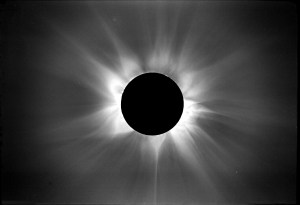
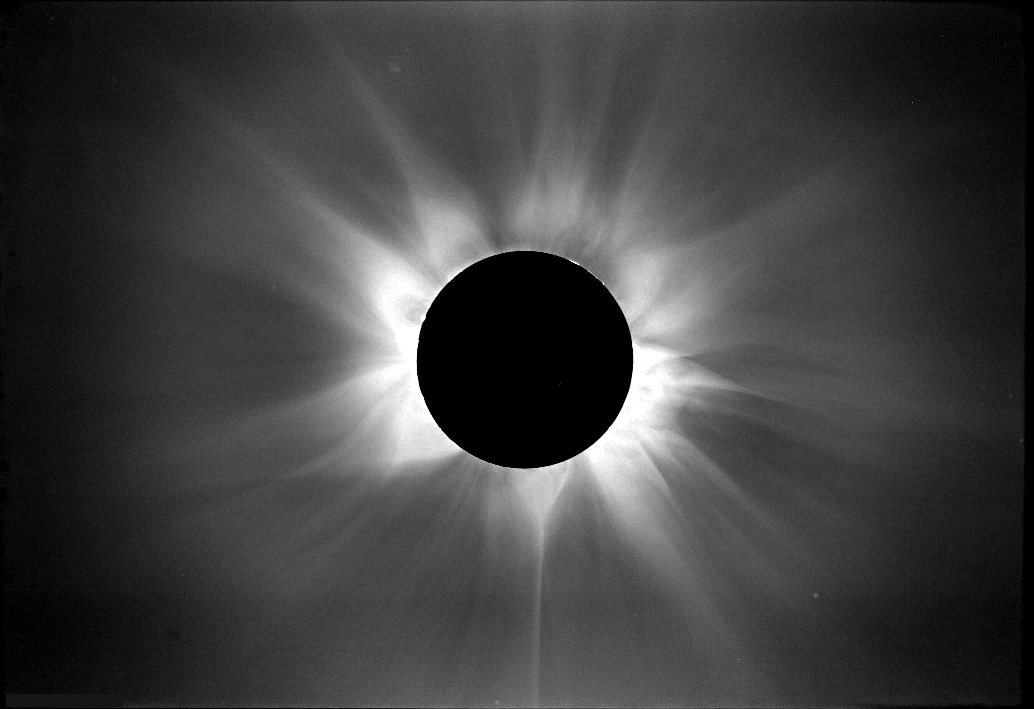
Credit: NASA
There’s a whole lot going on in nature this week. Take, for example, the March 20th total eclipse. It’s the first total for a couple of years. The others have been annular, or the kind where the moon doesn’t quite hide the sun and it peeks out like a ring. And in case you didn’t know, eclipses come in pairs, two weeks apart: the sun hides its face, then the moon. It’s just the way nature works. Not everyone gets to see this spectacular event; those in the northern extremes of Europe (and polar regions) will see it just fine, but the rest of Europe will have to settle for a partial eclipse. That’s fine by me, something is better than nothing.
Eclipses are weird. I experienced a total eclipse when I was about 7 or 8 years old. It was covered live on TV, when people still held wonderment and what nature could do. I clearly remember it got dark, a fairly good representation of the stars came out, birds went silent and all became still. Mom admonished me for looking up at the sky, yet both of us snuck a peek and I remember getting a chill. It was so, so strange to see this blackness where the sun ought to be. Lots of our neighbors came outside and pointed and laughed nervously. We all knew better. We knew that the sun’d pop back out again and the warmth would return, birds would wake up, a bit confused at the short night, perhaps, but ready to launch into song once more. And sure enough, it did. Everyone retreated to the inside of their houses, catching the few last bits of the broadcast describing the marvel we all experienced.
So what if the sun got stuck, though, behind the moon? Suppose, just for an hour or two, the sun had had enough of working to warm the planet. The moon, normally a celestial object waiting to dominate the evening sky, chose not to budge, either. Let’s say they went to war. A line was drawn in the sky, and neither of them were giving way until the other relented. Imagine what people might say then? Oh, they’d be all right with it for about the first five or ten minutes, but after that? A nip in the air becomes a chill, then cold, then freeze. Our balance turns wobbly, then a sickly feeling emerges from our insides. Hair rises off of our heads as breezes end. Building creak, water flows everywhere and electricity shorts out. Planes can’t fly. Our world ceases, but still exists. The National Guard is called out, but is helpless against the force of nature.
Take that, Nature says, and keep on ruining the planet. I’ll take care of matters for myself. When all of you have had your fill of ignorance, I’ll imbue you with light. Until then, may the best people evolve, while I clean house.
Ah, if only…
In the meantime, we’re still here, facing the Ides of March, Pi Day, and the inevitable East Coast first day of spring snowstorm from the relentless winter we’ve been experiencing. Can’t wait to shovel that 3″ – 6″ in the driveway.

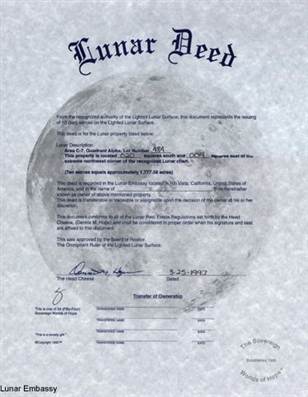
Credit: Lunar Embassy
This sort of thing has been going on for seemingly ever – real estate for sale that’s basically unobtainable – but it’s never stopped anyone from trying and believe it or not, it’s a profit-making enterprise.
Take, for example, LunarLand.com. Since 1980, they’ve been selling offworld prospectors lunar property one acre at a time. And why not? Just about everyone, and I mean everyone, has endorsed them. A quick trip to their website tells you that over 250 celebrities have snapped up lucrative tracts of land, perhaps one day to start a development bearing their name.
It’s not like it’s a great wad of dough you have to shell out, either. For $29.95, you too can lay claim to a spot of your own, and it comes complete with all the documentation you’ll need. So if some pesky astro-, cosmo- or taikonaut trudges through the breccia on your spot, you have every right to give them the boot or charge rent.
So how is this possible? Well, in 1967 a treaty stated that governments can’t own lunar land, but there’s nothing to stop corporations and private individuals from doing so. All property sales are registered with the US Office of Claims Registries, the same office that’s responsible for any land claims. Any government in the world is free to challenge this, but so far, none has.
But is it realistic? Can you really hop in your own rocket, blast off and set up housekeeping/shop in a barren world with little means to support yourself in any way, shape or form?
Ah, that challenge was faced by those intrepid souls who once trod the lands of this country back in time, not knowing what they’d find or if they’d survive the experience. But somehow life carried on, the land was settled and people prospered. Houses were built, highways grew and shopping malls sprang up like crocuses in spring.
So, what are you waiting for! Grab your lunar acreage while the opportunity’s still fresh!
I just happen to think this is a great article for anyone to read who’s been working on a story, book, blog, or anything involving nouns, verbs, gerunds, parts of speech and their eventual formation of fabulousness.
 One Lazy Robot
A lot goes into writing a good story, unless somehow you’ve made BFF’s with a Muse. If that’s the case you don’t need me, and you should go frolicking through fields of daisies, jerk. For the rest of us, there are a lot of aspects of good storytelling that require conscious attention.
These range from having good mechanics (ie: knowing how to put together a sentence that sounds good, or atleast intelligible), to a strong plot (ie: interesting shit keeps happening!), to correct pacing (ie: your character doesn’t spend the first three quarters of the book splayed out on his back whilst sexy servants feed him grapes, and the last quarter of the book blowing up the moon.)
Today, we’re gonna chat about pacing, because it’s one of those elements of storytelling that is a slippery bastard to nail down. As the writer, pacing can be one of the hardest things to keep…
View original post 1,879 more words

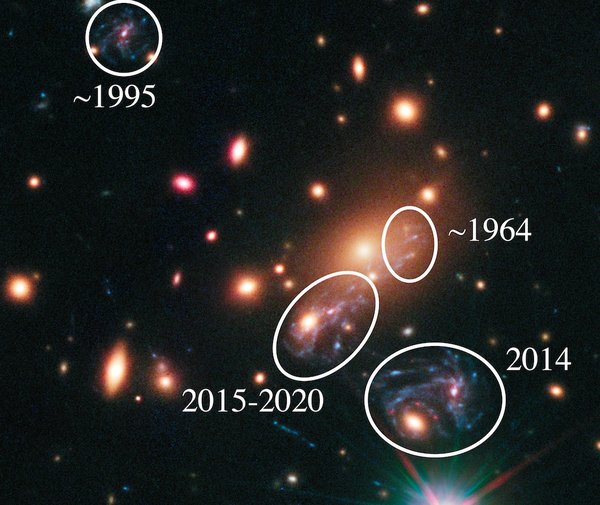
Multiple images of the Supernova Refsdal, appearing over time. Credit: NASA and European Space Agency
There’s a sight to behold in the universe, located in the constellation Pegasus. It’s known as the Einstein Cross, a singular supernova that is seen four times. It’s an example of the forces of time and gravity meeting in space, and what can happen when they dance together.
Simply put, the Einstein Cross is the result of gravitational lensing. That means there’s something in the way that’s spreading the view. Take, for example, one exploding star. Place in front of it a collection of galaxies. The gravitational force is such that the rays of light are spread in several different directions, and in this case, four. So while it’s rare enough to catch a star exploding, it’s even more magnificent to watch it four times.
The New York Times has a great article and a very cool video regarding this unique occurrence in the universe. You can read it here.

In case any of you are wondering where you could get yourself some new, cheap and quick sci-fi reads to load on that new iPad or tablet you got for Christmas, your birthday or just for fun, have I got a link for you!
Check out Wattpad, a site dedicated to new, established and undiscovered writers of all genres, but also for science fiction. There are literally hundreds of books to choose from, on a wide range of topics. If you’re searching for the latest in alien lit, or want to bone up on mysterious plagues or merciless wars, here’s your chance to follow serialized books. What’s also great about this site is it offers writers, both established and new, the opportunity to create and share their work.
By the way, it’s not just for sci-fi fans – it’s for everyone. If you want to sink into a romance or inform yourself on a particular topic, even catch the latest on werewolves and vampires, it’s all there.
But that’s not all, folks…there’s more!
Thinking of a good story and searching for a place to put it down into words? This site also allows you to create. There’s no demands on writers who wish to launch their careers, nothing to sign, no rights to control, no promises to turn over your firstborn. It’s a direct connection to 30 million readers worldwide who might just sink their teeth into your mysterious fantasy and become an ardent fan. It’s better than a blog, it’s your work!
If nothing else, this is a good site for those who might need a bit of encouragement to start placing their thoughts into a real work. Someone’s bound to trip over what you’ve written, and you’ll get a real chance to have others examine your work. Sure, it might be scary, but it’s also helpful. Think of it as a growing process, and you’ll be on your way publishing that great story you’ve been dragging around in your head.
So what are you waiting for – get writing!

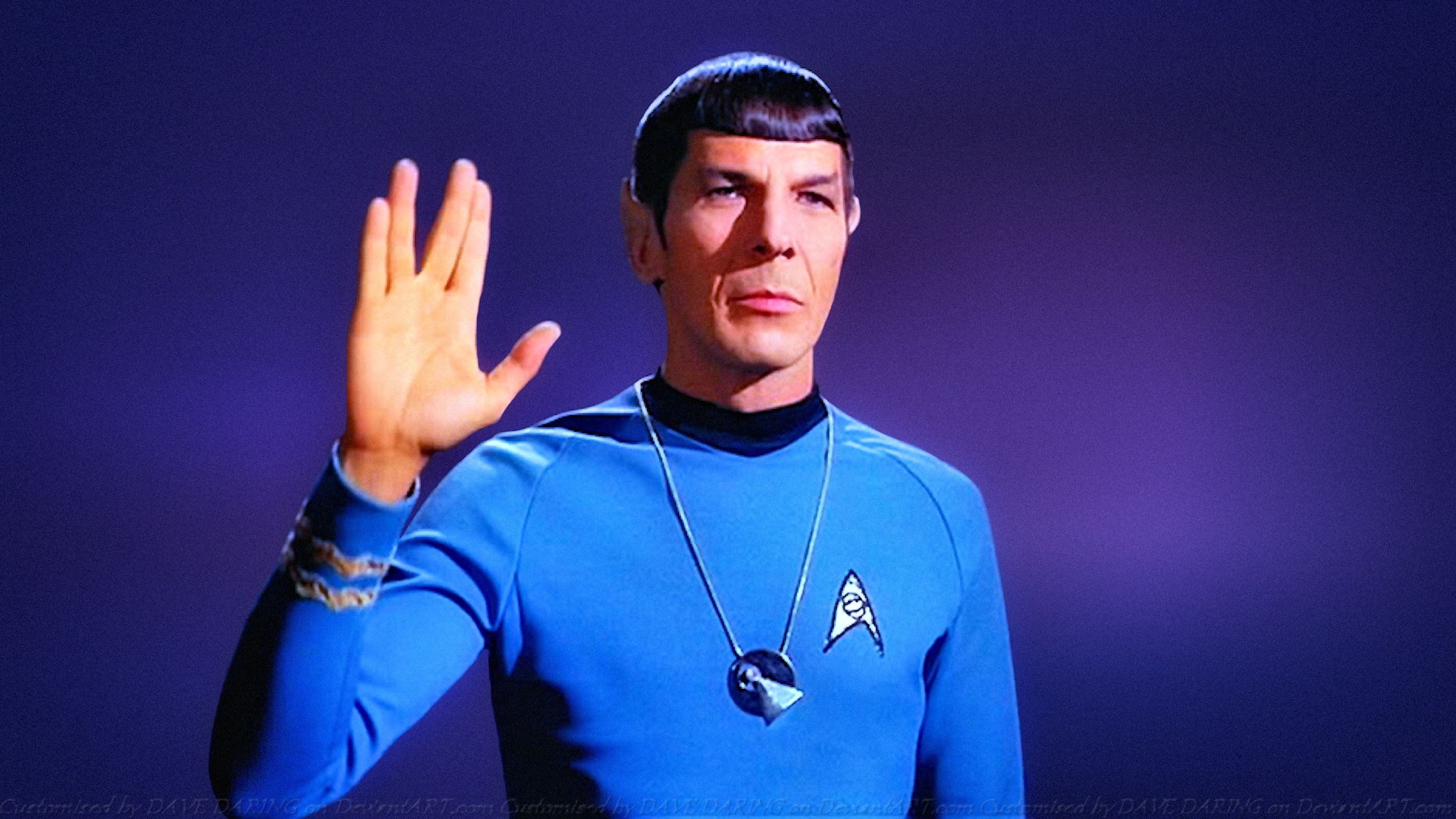
Farewell, Friend…
I heard he had gone into the hospital, but who’d ever think that Spock would die? That’s as unfathomable as space and time itself!
Spock…dead?
People of a certain age, such as myself, count their youthful years against the number of Star Trek episodes they identify with. I was quite young when they originally aired, but I remember seeing them. Later, in the 1970s, Mom always turned the show on after dinner. And there he was, Spock, spouting his quiet but firm logic against the perpetually angered and impulsive Kirk. He had a better grip on things, from his unique perspective. Half human, half Vulcan, he read into Earthly beings with insight, yet allowed his mature, tamer side to pump out the decisions that allowed the Enterprise to stay afloat in space.
So why wasn’t he the captain, you ask?
No swagger value, I’m afraid. A quiet, contemplative fellow, Spock chose to pursue feats of the brain instead of the brawn. And that’s fine, really. There’s too many jocks out there, and every braniac, nerd, geek and other reject embraced Spock with a passion, because it gave them a great model to follow. No, you don’t have to be a football player or a cheerleader – the universe needs thinkers, too!
In middle and high school, the same geeky types that were into Star Trek were also into such shows as Dr. Who and Space: 1999. Even Monte Python’s Flying Circus. We were the group that got all the strangeness because we didn’t have to worry about what people thought of us – they already thought we were weird. Our imaginations set us free, launching us into the stratosphere with odd concepts convincingly plausible. I got a bit stuck on wondering just exactly where in the universe the Enterprise was located, or headed. How come they never ran out of gas? Or water? Or food? Where did they get their uniforms from? Who did the laundry? How did they maintain personal hygiene? I figured a ship that size had to have an awfully large cargo bay. Maybe they did purloin provisions from populated planets.
My college friend Linda probably had some insight into these issues. She devoted her life (at that point, anyway) to two things: music and Star Trek. She memorized each episode, completely down to the credits. She possessed an actual female uniform and wore it when the occasion demanded it. Without hesitation she could name any tiny bit of trivia one threw at her, often showing down many a Star Trek scholar – which she proudly was – often at the price of a beer.
Still, this iconic sci-fi show would be nothing without its iconic star. Spock beckoned us to live long and prosper, which he surely did. He leaves us to enjoy the episodes which made him famous and live long in our hearts forever.










 Moon, Stars and Beyond