
In a recent post, I listed some of my favorite comics that make me laugh, or at least think. Now, thanks to the magic of the internet, there’s a wide world of comics that can help you learn more about science.
Now, when was the last time you were at a party and someone starts discussing a certain theory attributed to Einstein. While everyone knows he wrote the damn thing, how the hell do you explain it to that cute tomato coyly stirring her Stoli and lime? Yeah, you’re probably thinking that’s the last thing on her mind, right? Except when you swagger over to her, you overhear a stray comment that said tomato actually just received her second doctorate in astrophysics and starts with JPL on Tuesday…hence the reason for the party. Instead of recoiling in horror, you could simply read this comic. How? Dash into the toilet, pull out your iPhone 23 et voila! You’re right up there with tomato, sharing insights and maybe, just maybe, a few laughs.
Or, you ask a lovely lady to join you at the above party instead of finding a person of interest already attending. Said lady says no, she’s busy composing her thesis on the relativity of theories. So you take it upon yourself to charm up that nice lady who offered to watch your cat while you went to Barcelona (never mind you don’t have a cat; it was your last girlfriend breaking up with you wailing in the bathroom). She says yes, and once you settle down on the couch with your 7&7, in walks the first person you asked…looking for you! Oy! What’s a guy to do? Maybe this’ll offer a solution to your conundrum.
I tripped upon this site, The Awkward Yeti, and he’s totally cracked me up. He draws clever riffs on scientific concepts that are way cool! He drew the above link. Support him!
After you pour your favorite morning cereal into your bowl, do you often wonder how true the claims might be regarding such things as, “A complete day’s supply of iron”? Actually, there’s truth in that, depending upon what cereal you eat. Sketchy Science illustrates that for you, and follow the link explaining it all for you. It’ll make you wonder just what’s in your breakfast.
Finally, if you’re not sure about your place in the world, then maybe you’d better consider the universe. It’s been in the news lately. Here’s how you get yourself smart about it, quick.

Credit: NASA
God, I love Twitter.
I’ve got myself hooked into a whole batch of NASA, ESA and tons of other space-related Twitter feeds that keep me posted on what’s going down up there. You know, on the International Space Station.
I might be waxing romantic here, but why is it that for all of the problems the United States and Russia have had over the years, the space program shared between them seems to be a model of diplomacy?
I’m not dumb. I’m certain there are complexities and complications that I haven’t even considered or comprehended. Yet, here I was only a few moments ago, looking at the latest crew for Mission 39/40 that will ride a Soyuz up to the ISS: Alexander Skvortsov, Oleg Artemyev, Steve Swanson launch on Tuesday. In May, Reid Wiseman, Maxim Suraev, Alexander Gerst (a German, representing ESA) join them.
Looking through all of the images in the gallery, everyone seems totally preoccupied with their impending mission and what they intend to accomplish once aboard the ISS. Everyone is intent on completing their pre-launch tasks and training. There’s lots of photo-op shoots too, all smiles and poses. It’s more than obvious that all are dedicated to their jobs and more than likely they deem themselves fortunate to participate in this great adventure.
Does everyone discuss the current political situation embroiling our respective nations? Can’t say that they do, or even it they’re thinking about it. I’m sure it enters their minds. We’d never know about it.
Perhaps the tacit message that the crew of Mission 39/40 is sending us is this: we come in peace. We work together towards a greater goal. All of us can accomplish the impossible.
Maybe it’s time we all followed their example.
It’s no secret I’ve been a real fan of comics and graphic novels from the get-go. That’s actually how I started reading. Dad would have me sit on his lap and he’d open the Philadelphia Bulletin and there’s be Brenda Starr, Winnie Winkle, Alley Oop, Pogo and my all-time favorite, Peanuts. To this day, I have my coffee over the comix each morning, waking up with a smile that will inevitably be crushed once I step out the door.
For those of you who can use a dose of laughs tinged with sci-fi and fantasy, here’s a few of my favorite picks, in no particular order:
Brewster Rockit by Tim Rickart

March 20, 2014 above
Regularly, Brewster encounters favorite villains from “Star Wars” as well as other fantasy creatures. He battles evil from his ship, R. U. Sirius as it floats around the universe. His best pal, Pam, is a single mother who’s tough enough to blast enemies with a single bullet yet is brought down by Brewster’s unrelenting stupidity.
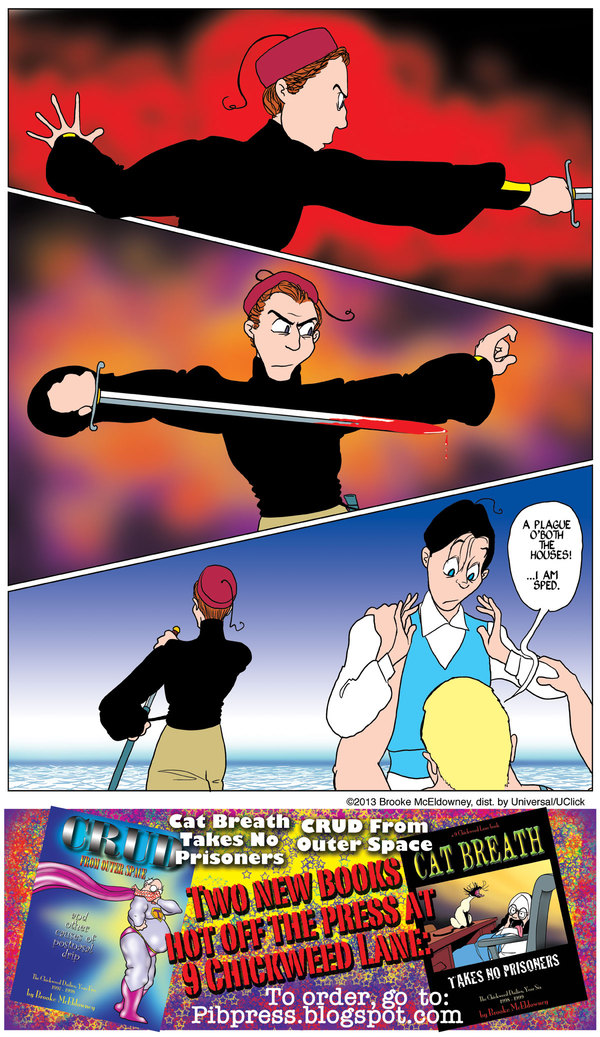
Pibgorn by Brooke McEldowney

February 12, 2014, GoComics exclusive
Though right now he’s doing a graphic novel serial installation of Romeo and Juliet, his ongoing series of Pibgorn, a fantasy creature, is amazing. The artwork is incredible. I’ve been a big fan since he started drawing it.
Plastic Babyheads from Outer Space by Geoff Grogan
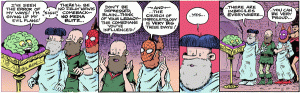
March 20, 2014
Need I say more? It’s original, all right. Don’t miss it!
New Adventures of Queen Victoria by Pab Sungenis

March 19, 2014
All the characters are clipped out from Queen Victoria’s inner circle and corresponding luminaries of the times, plus a generous sprinkling of other historical (and hysterical) figures. It’s very Monty Python/Terry Gilliam.
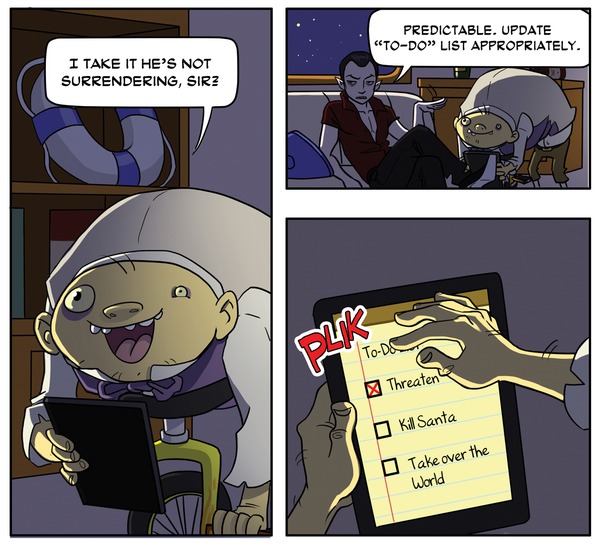
Santa vs. Dracula by Melissa DeJesus and Ed Power

March 19, 2014
Not for the faint of heart. Cutest of creatures face the most gruesome of deaths. The good news is Santa is a superhero and gives new meaning to the concept of holiday cheer!
That’s only a sampling. I have others.
If you want a comprehensive critique of the world of comics, I send you to my go-to source: http://joshreads.com. Home of the Comics Curmudgeon, Josh Fruhlinger writes a daily dish of caustic commentary sure to send you atwitter with laughs. He’s relentless on such chestnuts as Mary Worth. Josh also bears a particular hatred for Funky Winkerbean, which, I must admit, I wholeheartedly agree with his comments. Occasionally Josh takes a break and leaves Uncle Lumpy to take his place.
So enjoy folks, and have a good laugh!

A picture of the Big Dipper taken 2007/08/23 from the Kalalau Valley lookout at Koke’e State Park in Hawaii.
Have you ever felt rejection? Of course you have. It’s like this.
So you get all dressed for a party, suit up and shave, maybe slap on a little smell good and bounce out the door. Everyone’s going to recognize you, tell you what you want to hear, kiss up a bit. Sure, it’s going to be a great evening, all sparkles and glows.
Pulling up to the party, you notice there’s eight-eight cars filling all the spots. Hey, look, a Lamborghini sitting next to a Chevelle. Who’s that loser, eh? But at least the Chevelle’s parked. Where’s the spot for you car? Nothing. That block where Party Central’s kicking seems to be further and further away as your car searches for someplace within the same town. Finally, you spot one, but it’s kind of remote. Still, it’s available. In zips your car and for now, that party’s still jamming and you’re making tracks.
Knocking on the door, you feel the high vibe on the other side. After a few moments there’s no answer. Another knock. Nothing. Damn! If everyone knows me, why don’t they hear me? Why don’t they answer? Why’m I being dissed?
Because you’re an asterism, that’s way.
Asterisms are those groups of stars that are incredibly famous, everyone knows who they are yet they have no official recognition. How? Why?
That’s because they’re only part of the story. There’s more where that group of stars came from.
Take, for example, The Big Dipper. There’s hardly a person in the northern hemisphere that doesn’t recognize it. Visible all year long, its two forward stars point directly to Polaris, the celestial north pole. It dances gracefully with Cassiopeia on the opposite side of Polaris, and if you’re clever, one can tell the time by their position in the sky. Yet The Big Dipper is part of Ursa Major, or The Big Bear. It forms a saddle of sorts on the Big Bear’s back.
Another example is The Pleiades. This sparkling group of six stars shimmers on cold winter nights. They are part of Taurus the Bull, and sit at the end of Taurus’ horn. Occasionally, a planet or the moon might wander nearby, and if you’re really lucky, one of those might appear to cross over it.
There are others, like the Teapot (part of Sagittarius) and the False Cross (part of mega southern constellation Argo/The Ship, made up from components of the Ship’s Sail/Vela and Ship’s Keel/Carina), and Great Square, connecting Andromeda and Pegasus.
Don’t feel bad for these asterisms, however. It’s good to be taken. Who wants to be alone?
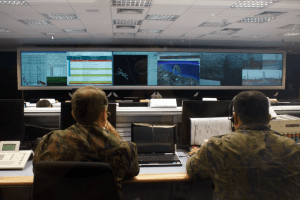
The Brazilian Space Agency’s Control Center at the Alcântara Launch Center (photograph produced by Agência Brasil, a public Brazilian news agency).
Yes, it goes without saying that the United States, Russia and China have space programs. India’s is growing by leaps and bounds, and not a day goes by when there’s loads of comments flying about saying how they’d rather spend their money launching rockets than feeding their population.
Sure, sure, these nations have a whole lot of resources (i.e., money, engineers) to send just about anything into orbit and back. But how many of you know about Agência Espacial Brasileira (AFB for short)?
What, you didn’t know Brazil had its own space program?
You’d be surprised how many people out there have absolutely no idea that not only does Brazil have a space program, its launch site is the closest to the equator, offering excellent trajectory for geosynchronous satellites, or those with the same orbital period as the Earth.
There are two launch sites within Brazil: Alcântara Launch Center and Barreira do Inferno Launch Center. Alcântara (otherwise known as Centro de Lançamento de Alcântara or CLA) is located in the state of Maranhão on the Alcântara peninsula. It’s the closest to the equator, next to the sea and in a relatively low populated area. It’s also the main launch site in Brazil. The second site, Barreira do Inferno Launch Center (known as Centro de Lançamento da Barreira do Inferno or CLBI) is located in Parnamirim, Rio Grande do Norte state. Its main purpose is to launch sounding, or research rockets into space as well as support Alcântara.
The AFB has plenty of activity. Since 1990, they’ve been launching and/or developing a multitude of their own missions, as well as cooperative projects with the United States, Russia, China, Argentina and Japan, even the Ukraine. Brazil’s launched satellites of its own that collect intelligence and weather data.

Marco Pontes is the first Brazilian astronaut. He shares space cred with both NASA and the Russian Federal Space Agency. Presently, he’s developing and fabricating parts for the International Space Station, and is on standby for future missions.
As the space race ratchets up across the globe, Brazil is poised to be a significant player. Keep your eye on them…and watch their future launch into the heavens.
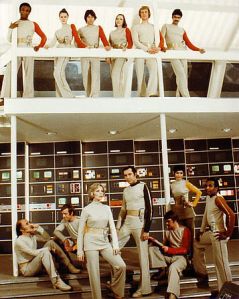
Source: TC/ATV Space 1999 Publicity Book (1975), promotional photo distributed in the press kit for the series Space 1999
I might be a little behind the 8-ball, but one can’t keep up with everything, especially with two teenagers running around my house. Now, they’ll be the first to tell me that I know nothing – NOTHING! – but yet, I’ve been more ahead in trends than my 16-year-old daughter. Hey, I’m the one who tells her that my favorite bands don’t play on regular stations, and I fork out $$ for satellite radio just so I can hear some decent music.
So I was trolling the sci-fi web the other night, picking through my favorite sites and lo and behold, I tripped upon a website regarding Space 2099. Space 2099! Really? Eagerly I rifle through the pages, hoping a tiny tidbit of info would pop out and get me stoked.
I remember the old series, “Space: 1999” back in the seventies when I watched it with my mother. Ma got me hooked on sci-fi as a tiny tot; I can say that I remember watching the original “Star Trek” on its first run, and then on its multitude of reruns, as well as Dr. Who with Tom Baker (on PBS at the time, who also had the foresight to air “Monty Python”).
Look at their outfits: they were so 1970s, and yet had a practical sensibility about them. Designed for comfort and ease of movement, their stylish togs nodded to the fashion of the day (Bell bottoms? Why not!). And this is what impressed me: those costumes were unisex. No deep cleavage cuts and short hemlines for the ladies, no sir. How else can one chase around evil in dystopian universes when one has to spend a portion of one’s concentration on whether or not one’s secrets might be revealed? Besides, if a character’s outfit didn’t fit, he or she could exchange it with anyone, male or female. How practical is that? Certainly the folks back at WANDER looked to economize even then.
Barbara Bain and Martin Landau (who would go on to be an even greater character, Bela Lugosi) ran Moon City with a combination of authority, grace and structure. They didn’t even give a second thought to the fact that now the moon was its own ship steering through the stars and its (unlikely) departure from Earth’s influence might wreak final havoc on tides, coastlines and general principles of physics. They were busy folks, and who has time to worry about such things when there’s Dorcons to chase?
Regrettably, there were only two seasons and 48 action-packed episodes to enjoy. One might catch it in repeats here and there, but it generally disappeared from view. So when I caught the news that it was announced (back in 2012 – how did I miss that?!?!?) that there’d be a 2099, naturally I was intrigued. I’m certain that this incarnation’s going to have a lot more bells and whistles than the decidedly low-budget tactics that made the original so charming. But the sucker that I am, I’m sure I’ll be pulled into its vortex and grab all the episodes I can.
As they say, Stay Tuned!

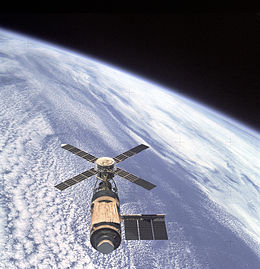
Skylab
If you had the opportunity to rocket out to space and orbit the Earth, would you seriously consider going on strike during the experience?
That’s exactly what the crew of the last manned mission of SkyLab did. Commander Gerald Carr, Pilot William Pogue and Scientist Edward Gibson, all space rookies, served on an 84 day mission that consisted of long days with many tasks to complete. Eventually, the crew became exhausted and fell behind schedule. Worse, Pogue succumbed to space sickness and attempted to hide it from mission controllers. Skylab astronauts called it “space crud,” which consisted of headaches, dizziness, nausea and the inevitable vomiting.
Complaints were made and rebuffed by Mission Control, who believed the men were too lax in performing their duties. An overwhelming schedule left little or no time for the occupants of SkyLab to enjoy the magnificent view afforded them out the window. About halfway through their mission, the crew had had enough. All were exhausted, requested a break and then helped themselves to time off. Cape Canaveral’s crew became mystified. This never happened before – a crew going on strike? Believing it to be depression or medically caused lethargy, the SkyLab astronauts disagreed. All they wanted was a chance to gaze out the window and take in the beauty of all that Earth and space. Clearly the profound experience of watching the home planet from such a vantage point affected all of them deeply, and although their work was of great importance, the ability to gaze downward at the Earth in all of its beauty instilled a sense of wonder difficult to express. More time was needed to cherish what laid before them and to contemplate their emotions regarding it.

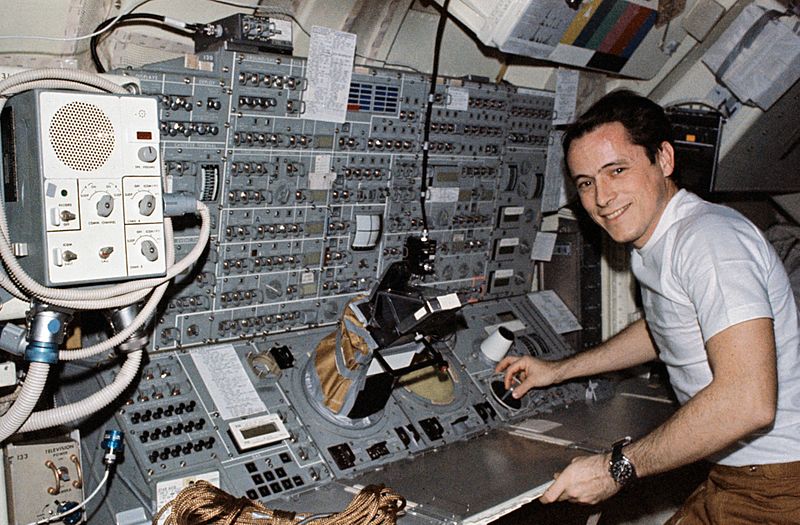
Scientist-Astronaut Edward G. Gibson, Skylab 4 science pilot, stands at the Apollo Telescope Mount (ATM) console in the Multiple Docking Adapter (MDA) of the Skylab space station cluster in Earth orbit.
From that point on, the mission workload eased. As a result, production increased and the men had performed more work than previously planned. Amazing displays of space grandeur awaited. Gibson monitored the sun’s surface and watched the development of a solar flare on January 21, 1974 and filmed its development, a first from space. Many photographs were taken of the Earth, including Area 51, which went ignored for years.
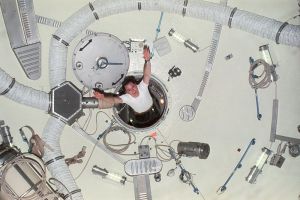
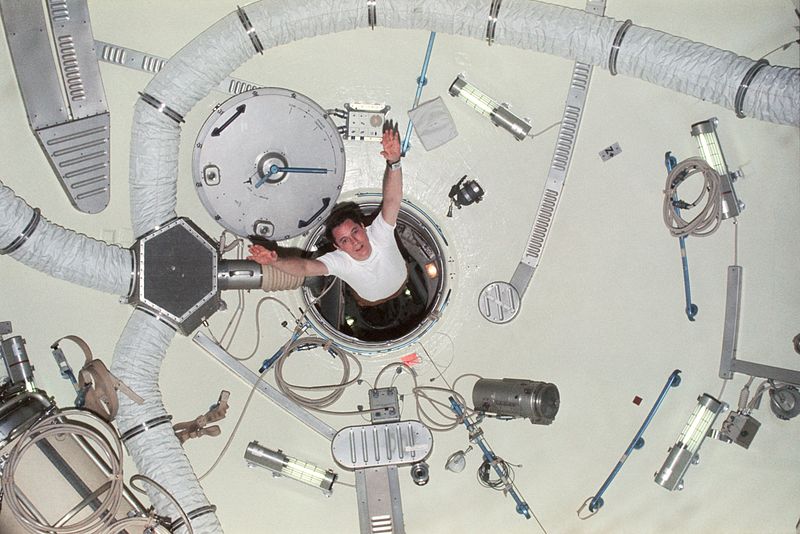
Scientist-Astronaut Edward G. Gibson, science pilot for the Skylab 4 mission, demonstrates the effects of zero-gravity as he sails through airlock module hatch.
Also during their mission, Comet Kohoetek made its dramatic appearance in mid-December 1973, and on December 30, during a spacewalk, the comet appeared from behind the sun to continue its return to its origins.
Skylab Mission 4 returned to Earth on February 8, 1974, having logged 1,214 Earth orbits, four EVAs totalling 22 hours, 13 minutes, traveling 34.5 million miles in 84 days in space.

Back in the sixth grade, I wandered into the school library to pick out a good read. At the time, I had a serious crush on Encyclopedia Brown. He was so cute, so smart, and he had a girl for a bodyguard. As an added bonus, his Dad was the Chief of Police, giving him an edge to solve mysteries. As I sifted through the shelves, I was horrified to discover that all of the EB books had taken leave with another student. I felt betrayed somehow, as if he was cheating on me. Brokenhearted, I rifled through the science section, thinking, “I’ll show him,” and selected a topic far and away from his range of knowledge. If EB thought detecting was cool, I was out to prove that astronomy was much, much cooler.
At that age, I knew few constellations, mainly the standards like the Dippers (technically speaking, the Big Dipper is an asterism), Orion and a few others. I had a really cheap telescope and stared at the moon when it passed by my bedroom window. I did see all these gloriously illustrated pictures of people and things superimposed over stars. Yet when I tried to find them in the sky, I had a better chance of solving EB’s mysteries a few pages in than I ever did figuring out where those group of stars happened to be.
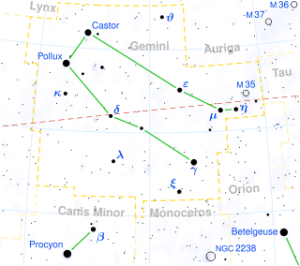
Sticking out at an odd angle was a deep blue and yellow book. Its spine said The Stars and was written by H.A. Rey. Say, wasn’t he the “Curious George” guy? The book’s colors were similar (think the man in the yellow hat). I pulled it out and on the cover was the constellation Gemini, actually looking like stick figure twins. I opened the book and there were many more constellations to choose from, all more or less resembling what they were meant to represent.
It was a revelation.
Rey’s many charts in the book redrew the lines connecting the stars and by doing so, revolutionized the way the average person sees the constellations. To this day, I wonder why no one had thought of this before. Thanks to his insight, many field guides have adopted his methods of presenting the constellations. Even Albert Einstein noticed his work and said, “Many thanks for your lucid and stimulating book. I hope it will find the interest it deserves.”
Every night I could, I’d go outside with my copy of The Stars and see what else there was hanging out in the heavens. Before long, I knew them all, when they rose and set, what season they belonged to and how to find planets among them. The stars became my friends. Excited to see The Herdsman each spring, I’d ask him how things were since we last met. The Scorpion, first rising at dawn at the end of January, makes me happy to know that summer’s not all that far away if it’s rising. Aquarius, my sign, is a gorgeous constellation that spreads across the late summer and early fall sky, if somewhat dim.
Rey conceived this book for anyone sharing the love of the heavens as he did. I highly recommend this book who wishes to embrace and further their love for the stars. And when next watching your favorite sci-fi show or movie, you’ll know exactly where the Andromeda Galaxy is…clearly marked on the knee of the constellation for which the galaxy is named…as shown on Page 42.
The Stars: A New Way to See Them, (ISBN 0-395-24830-2)
I’m glad BBC American plays “Star Trek: The Next Generation” regularly. Though I don’t watch it every night, I do see it often enough to revisit my favorite episodes. Still don’t get why Tasha Yar had to die, although I wondered what it must have been like to get busy with Data. Wesley Crusher was a sniveling boy-man who eventually wound up on Eureka! as a sniveling man-child.
But I digress.
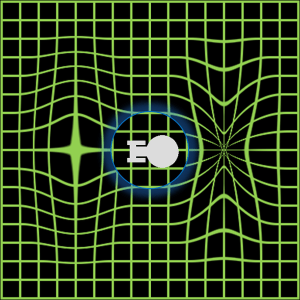
Geordi La Forge often began episodes of ST: TNG with a situation arising in subspace. When this series first came on in 1987, I never questioned what that could be. My neighbor Ira and I often sat in front of the television with a selection of Chinese takeout strategically placed on the coffee table, allowing us to view the show and feed without having to look down. Later, as I moved into a tiny Manhattan flat, my ritual continued (alas, without Ira, who married and moved on to other things). It slowly occurred to me that I had absolutely no idea what what subspace is and how one could access it.
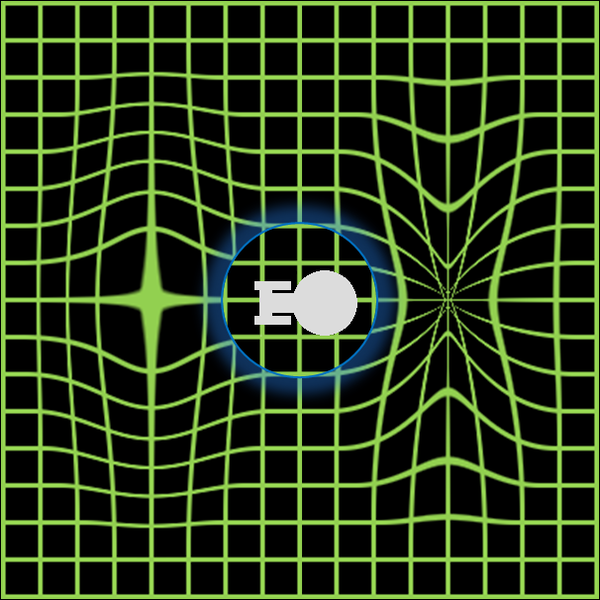
Subspace, in the strictest sense, is defined as a hypothetical space-time continuum used for communication at a speed faster than that of light. However, a visit to the Star Trek wiki provides this explanation:
“Subspace is an integral part of the time-space continuum, distinct, yet coexistent with normal space. Subspace and normal space are confluenced together. However, in some regions an interfold layer forms between the two realms. Subspace has an infinite number of domains. Geordi La Forge compared it with “…a huge honeycomb with an infinite number of cells”.
Tetyron particles are a form of subatomic particle which can only exist naturally in subspace. If they are released into normal space, they exhibit erratic properties. This can only occur when the fabric of subspace comes into contact with normal space in some manner.
Some species, such as the solanogan life forms were indigenous to subspace.”
An important note follows the above definition: “Exactly what subspace is has never been revealed on screen, though many theories, both fan-based and scientific, have been put forward. Explaining subspace would be hard, since it is used as a solution and cause of various problems throughout the series. It is implied to be the medium through which faster-than-light travel and communication is possible, similar to hyperspace.”
TNG wasn’t the only series benefiting from subspace. The entire “Stargate” franchise liberally used this as a plot device, as well as the phrase “beam me up (or somewhere).” This might be explained as homage to ST’s creator. Though I don’t remember the exact episode, one character says to the other, “Don’t tell me you haven’t worshipped at the altar of Roddenberry.”
This leads me to believe the following: Good writing and plots don’t necessarily involve complete and scientifically accurate explanations. Just go with it and see where it takes you. Otherwise, you might wind up in a subspace inversion, and that’s nasty.

I’ve been reading a bunch of other people’s blogs tonight, and an excellent one, charliejane, has a wide range of subjects that thoroughly discussed all things science fiction, with a slant towards readers and writers of sci-fi. Many participants eagerly join in on all the topics presented, and I even learned a thing or two.
One thing I did notice on the site was the very real question of science behind science fiction. One person who was engaged in a conversation said, “It drives me insane when someone writing space opera gets physics all wrong. It drives me nuts when authors of stories that feature computer hacking don’t know anything about hacking or programming.” That’s a valid point. However, if we’re talking about the future, it’s guaranteed that what exists today regarding hacking and programming isn’t going to be around 40, 60, 80 or 100 years from now.
Jeez, I clearly remember IBM’s cards and the exciting career one could have being a keypunch operator. In 1984, at my first real job that didn’t involve flipping hamburgers, I used an IBM PC jr., which is laughable by today’s standards. I had an “A” drive and a “B” drive, both requiring floppy 5 1/4″ disks. In order to print sideways, I had to put in a separate floppy just for that. And oh, how jealous I was of the resident programmer who had an IBM AT that had – get this – 20K of memory on the hard drive. 20K!
Then, I got a new job in advertising. The agency’s client, among others, was IBM. Since there’s IBM offices worldwide, we needed a way to contact them that didn’t involve staying up all night to make a phone call for a yes or no question. So we had this nifty solution called PROFS. Again, we had a special disk we put in that connected us to the phone line, and we typed up a message that was whisked off to Japan, Australia, Europe – anywhere IBM was located. Several times a day, we’d go and have us a look and retrieve messages. Generally, they’d come the next day, so there was always something in the loop.
You know what they call that technology today? Email. You know what year that was? 1988.
How many of you remember that magical day when the freshly-titled IT guy hooked up a phone line to the back of your computer and you were instantly introduced to the great world beyond your desk? It was 1994 for me, and we had the Internet installed. I had email, too. Netscape was our browser, and we used Webcrawler, Alta Vista and Yahoo! too. There was this button on Yahoo! that said, “Surprise.” One click would take a surfer on a fascinating ride around the internet. I saw plans for plumbing the bathroom, horoscopes, blueberry pie recipes, and all sorts of nifty stuff.
Right along with all of this, there were the evil hackers who learned to take from what the Internet had provided, only to steal and corrupt whatever they could coax their keyboards to type. I dated someone who knew how to do this and back then, it didn’t take much. Today, there’s little that smart kid can’t figure out how to break into.
But in the future?
We know how programming works today and most likely can predict how it’s heading. But there are things we don’t know. My only experience with e-books was watching characters on “Star Trek: Deep Space Nine” read from them. I didn’t know about iPads then. All right, not the best example, but still.
All I’m saying is, true, it’s not a good idea to write about programming and hacking if you don’t know what it is now. But if I lived in 2080, who’s to say what will be the shape of code to come?
Ideas?










 Moon, Stars and Beyond