What is it about the name Lucy that translates into a woman of exception?
My first exposure to anyone named Lucy appeared like this:
Thanks to “Peanuts” and Charles Schulz
Though depicted in cartoon form, Lucy was mean, authoritative and plain bossy. Her combative side played against her profession as a therapist, although her rates were rather low to reflect the acidity of her plain-spoken advice.
Credit: “Peanuts” by Charles Schulz
Don’t be fooled by her placid expression – this girl ate boy’s psyches for lunch!
Somewhere along the line, well before the above Lucy’s time, another individual bearing the same name roamed the planet. None of us were around to duck her left hook or receive any sort of constructive advice from her jaded mind. This particular Lucy avoided verbal battles and stuck to those pertaining to self-preservation.
Credit: University of Minnesota at Duluth
Lucy’s daily life revolved around the basics: food, water and trying not to be eaten by hungrier life forms. Her ambitions weren’t to solve ancient mysteries, yet she became one for moderns to discern. Little did she realize she’d become a celebrity in scientific circles; the most she probably hoped for was to make it to the end of each day in one piece. Still, I can imagine her fighting off both her kind and others who might interfere with her general happiness and well-being. Take a look at that face: is that a smile or a taunting smirk?
This brings us to yet another Lucy:
Credit: “Lucy”, Universal Pictures
As you can see, this Lucy beautifully combines the self-preservation instincts as our ancient Lucy with the no-nonsense style of “Peanuts” Lucy. As the unwilling recipient of a manufactured illicit drug from a notorious Asian drug god, Lucy finds herself evolving rapidly through the 100% capacity of her brain. All sorts of neat things happen, both for good and ill, but she makes it plain that once she’s got this drug in her system, she’s driving the bus and she’s not waiting for anyone to get on.
My husband Andrew and I went to our local dodecaplex to see “Lucy” for ourselves the other night. Eschewing overpriced greased popcorn, we scored prime seats and sat through the merciless chain of dull trivia slides, irritating adverts and banal animated rules and regs for the theatre. As the lights grew dim, we were subjected to the endless onslaught of trailers, including the truly frightening one for “Fifty Shades of Awful” (one look at the male “romantic” lead leaves you questioning: Him? Really? That’s the best casting could do? Hint from a woman to guys: DON’T take your favorite lady to see this on Valentine’s Day when it opens. Trust me. Flowers and chocolate are a far better choice).
Just short of a revolt from the audience, the film finally started. I’ve always like Scarlett Johansson and she seems to do well with sci-fi roles that have a bit of bite to them. Though she started off a bit weak, her performance strengthened as the film went on. What I didn’t like about the film was how it expected viewers to take a real leap of faith about how the plot unfolded, and just expected you to believe what was happening required little or no explanation. Although that could be said for many sci-fi films, on the way home Andrew and I laughed about how aspects of the plot unfolded without regard to plausibility. Still, we liked it a lot, it was entertaining and fun and I’d recommend it.
Besides, SJ’s Lucy gets to meet her ancient predecessor. Shame there was no mention of Charles Schulz’s creation.
The New York Times had an excellent article on the possibilities of life Out There. You know, all that space that the universe occupies. According to Carl Sagan, there was no reason not to expect life that was comparable to humans. But if you asked the competition, evolutionary biologist Ernst Mayr, we were it. Sure, it was reasonable to expect primordial soup in other locales, with perhaps a few vegetables thrown in for variety, but Mayr was steadfast in his beliefs that the chances for humanlike life anywhere but here was slim to nil.
Naturally, there’s also that school of belief that attests to aliens living among us, including the abductees who’ve been tested and probed. Those unexplained sightings of strange ships hovering over dark highways in remote locations – that can’t be fake, eh? There has to be something real under Area 51, right? After all, why do they protect it so fiercely?
If you ask me, I’d bet the rent on life existing outside our little blue dot. Compare it to the lottery. The higher the stakes, the more players become involved. Eventually, a number’s picked and a winner is paraded before cameras as the newest bazillionaire. On occasion, though, there’s more than one winner, and regularly three or four. I’m no mathematician, but what are the chances that several people will bounce into the local gas station, drop $20.00 on gas and another $3.00 bucks for a few Powerball tickets and all come out winners? It happens. So why not expect life on other planets?
Carl Sagan maintained that sound waves generated from TV and radio drifted out among the stars would signal to intrepid space voyagers our existence. That was detailed in Contact. Those sound waves possess properties that cause them to stretch and grow as they wander further from their source. By the time those waves are detected, what discernible information remains attached to these signals would be challenging to interpret. But then again, the right exoplanetary scientist might find them an intriguing prospect: thin signals meaning what? A project to research, to turn heads into another direction to discover their source? Our planet, uncovered at last?
What’s to say there isn’t a planet with inhabitants who share the dreams of finding others, only to be told the possibilities are so incredibly remote it isn’t worth a bother?
Here’s how I see it: out there, far from Earth, a soul ponders what bioforms rose and prospered elsewhere in the abyss of space. Technologically advanced to send out space probes, this soul launches a machine capable of seeking clues, if not evidence. Time passes, the soul dies, but other scientists take this soul’s place and keep on with the vigil. Eventually, the machine wanders so far away from its home planet that even its trail of crumbs grows cold. After a great deal of time, the machine is lost to memory and passes into legend, but the language on the foreign planet evolves to the point where even the legend transforms into a mystery and eventually forgotten. Meanwhile, life on that planet succumbs to its own evolution as its inhabitants face other issues that seem more pressing or trivial, but interest in further explorations has shriveled as it’s become necessary to focus on the lack of rain, food, or a dwindling resource that is elemental to the stability of life on said planet. Or, life for the other planet’s inhabitants is fulfilling, and therefore interest plummets because all needs are met and exceeded. Curiosity fades as the inhabitants indulge in The Good Life and place high importance cultivating perpetual happiness.
On a peaceful September morning, blue skies except for drifting patches of cumulus clouds, a flash streaks across the sky. Whatever caused it crashes into a suburb of a medium-sized city, resulting in a fair amount of damage to both the landscape and the object. Upon cautious examination, its solid core leads Earth scientists to believe it’s not merely silicon. Placed in the hands of a particularly observant scientist, a barely imperceptible vibration reveals a secret only a sensitive hand would notice. “Hey,” says the Earth scientist, “I think we got something here…”
No alien spaceships, no apocalyptical force, only a simple device, badly damaged and time-worn, offers a clue to a glorious civilization similar to our own, whose own culture is seemingly lost to the wastelands of space and disbelieving souls.
In addition to my regularly-scheduled blog entries (which, I admit, have been rather slim as of late…sorry!), I’m dishing up a delicious serving of quick but quotable links. That is, once you take a look at what I’ve got here, you’ll be talking about them to your friends, family and blogosphere buds.
So without further ado, here they are:
1. This comes via the website Cool Infographics, which offers a wide selection of ordinary data magically transformed into wonderful graphics detailing ideas, thoughts, facts and other items of note. Randy Klum is the author of both the site and the book of the same name. The link below details 50 years of visionary sci-fi computer interfaces, or, in other words, television shows and movies’ predictions for our digital futures, starting with “Lost in Space” and continuing onto the movie “Oblivion.”
2. There’s a whole batch of brash storm chasers following tornadoes, or hurricane hunters that fly planes directly into the eye of a hurricane to see what’s going on inside. I’ve witnessed tornadoes forming myself (not by choice) or totally nasty thunderstorms approaching while driving. Now imagine yourself aboard the Cassini spacecraft and zipping around Saturn. You’ve discovered a storm at its north pole unlike any other. Click here and prepare to be amazed…
3. Here’s a followup to the blog a wrote a few weeks ago regarding the zombie spaceship otherwise known as the International Sun-Earth Explorer-3, or ISEE-3. Unfortunately, the hardworking citizen scientists were unable to steer the craft into a direction that would bring it closer to the moon. However, I highly recommend that you not cheat yourselves out of this remarkable adventure and learn more about its extended mission and those that made it possible. Visit its website here.
4. The Martian Confederacy by Paige Braddock and James McNamara is a relatively new online graphic novel. It’s the year 3535 and three outlaws struggle to save Mars, once a former vacation destination. Read it!
5. Thinking about the perfect Christmas present? You can’t go wrong with a genuine lightsaber! Pick out the perfect one for your favorite Jedi knight right here.
Today I attended a seminar on what could have been a rather interesting subject. In fact, I found the keynote speech to be so compelling that the workshops following that speech should have been equally interesting. My friends joined me, and we found seats in a darkened room, preparing to pay close attention to the speaker and her presentation.
And then?
Not much. I blanked out. So did one of my friends. Perhaps the subject was presented too broadly, or the speaker lacked the confidence to deliver her speech with conviction. But anyway, there we were, passing notes via our text messages, on a wide variety of commentary. Were we bad? Possibly. Were we wasting our time? Never.
See, it’s times like these that I take advantage of a darkened room and allow my thoughts to drift constructively. I spend this time constructing plot lines and allowing my imagination to transport me to places where I normally struggle when planted firmly in front of my computer. It’s my little trip to the unknown, where I explore my inner world in search of an exemplary adjective. I’m writing a book, actually the second in a series. I know exactly what’s going to happen in this second entry, start to finish. No plodding plots here, folks. That’s all squared away.
All the characters have received their job assignments. They stand waiting patiently in the wings, looking for their cues to enter the stage of pages wherein their part comes alive, ready to jump into action. Unfortunately, they have no way of articulating it. Why? Because I’m still wrenching out the exact prose their fictional lips are about to utter.
I’ve developed my craft with wit, a hint of sarcasm and a touch of irony, laced it with suspense and a hint of romance (just a tidbit, mind you, because let’s face it, characters need love too). But I simply can’t bring myself to compose dull, lifeless conversation like this:
“What’s going on, Rachel?”
“Don’t worry about it, Pete.”
Ugh.
Those two sentences are my sculptor’s clay. Those words are what the characters are thinking, but I want them to deliver them so the reader’s clinging to the book with sweaty palms, anxious to turn the page in the hopes that Pete and Rachel are going to…going to…going to…oh, my God! is THAT what’s up???
So as I shivered in the refrigerated, darkened conference room, I leaned back in my leatherette chair and stared into the PowerPoint presentation. I allowed Pete and Rachel to swallow me whole, as they wrestled with that dilemma that floated beyond their reach.
Here’s what came of it:
Pete glanced at Rachel, worried. “And what’s your plan, if I might ask?”
“You need not concern yourself. I’ll probably slug my fist into a few protesting jaws and guts, but beyond that, nothing worse,” she said, smiling assuredly.
Oh, there’s more, but you’ll have to find out later.
Famous actor who should have been smarter or known better
One always hears that sooner rather than later, artificial intelligence will win the battle over humanity. People will become unnecessary, robots will rule the earth and humankind will vanish with a flicker of a dying match.
It’s true. I read all sorts of articles from many sources that discuss both sides of the issue. Many valid arguments from both sides. However, I can’t get past one thing: humans build these things, don’t they? Not machines, but flesh-and-blood types, the kind that need air to breathe and run on food instead of…well…whatever it is that AI runs on.
To be honestly, I’ve yet to see a real valid example of a machine building a machine smarter than it. In fact, I’ve yet to see any sci-fi out there regarding a droid, robot, gizmimee or quelnodder, screwdriver in hand, lifting the lid off of the head, chest and guts of a counterpart, carefully placing a chip inside and closing it up, then miraculously watching that God moment when all becomes too real and rises up to become the conquerer of the universe.
Droids/Robots constructing improved units also presents another item for discussion: why would it? What does a D/R have to gain by creating an improved version of itself? That improved version might notice its creater’s a bit dimmer than it, find the kill switch and be done with it. True. that can be part of the program and if the God D/R had any sense, it might write a code that includes a directive a al “I, Robot”, in that “do no harm” is a real and true order. Even that statement up for interpretation. If the God robot wants to kill its progeny, it’s preserving its own life with the successive, smarter D/R catches on that it has one chip up on its Daddy.
Bearing this in mind, why would a person create an object than can outsmart us? Frankly, humans are too clever for their own good to do this. First of all, we’re competitive. Egos are sensitive enough as it is. Some of you might remember Garry Kasparov losing to IBM’s Deep Blue, after beating it previously. He didn’t take it well at all. And then there’s that “Jeopardy” match with mere mortals. Although that took some doing, again, people got the short end of the stick.
So apart from these novelty versions of AI, what else can we cook up that won’t kick our pride in the shins? No one’s going to brag over their vodka gimlet and state to the bartender, “Say, want to hear the latest? Remember that droid I slapped together in October? You’re not going to believe this. It approached my boss, got my job – AND – a raise! Then, it locked me out of my office, drained my bank account and ran off with my spouse! I’m lucky I had enough chump change to buy this drink.”
Of course, we all know that drink was expertly served by none of than Bob the Botender, programmed to sympathetically listen to life’s ups and downs, collect tips and cut you off when you’ve had a few.
Mars, the alluring tempter of a planet, now exists in map form, easily accessible at the touch of a computer key. That’s it, just above the copy of this blog post. As you can see, there’s peaks and valleys, plus polar ice caps. From the shape of things, one can imagine where water might have flowed and accumulated.
Here’s another view: rotating Mars
The last map was created in 1987, when technology and resources were scant and crude, compared to today’s standards. Previous maps consisted of data taken from Viking probes and other sources. What made this latest incarnation possible is the use of the Mars Global Surveyor and the laser altimeter, which bounces up to 600 laser beams to the surface. Such details, as ages of rocks, were gathered from these sources.
Clearly, we’ve grown bored with the Earth. It’s that lover one always strives to please, yet somehow no matter what one does, it’s never right. In the end, one gives up and goes elsewhere to find love and acceptance. Its inhabitants have, in equal parts, loved and abused it, ignored its warnings and acted surprised when it fought back. In the end, we all know it’ll get its way and beat us, but no one who borrows time trodding on its grassy plains and thick muddy fields ever thinks about that prospect.
Instead, our eyes shift upward, looking elsewhere for a better situation and a second chance.
Ever since the discovery of exoplanets, or those outside of our own solar system, space explorers have been determining which of those planets will host life and, optimistically, life that we can identify, and, how we’re going to to meet up one day. Average citizens, whose off-world opportunities are rather limited, have to rely on imagination and conjecture to supply possibilities. After all, those alien spaceships have to come from somewhere, right? They can’t all be bad. Those Antarians from the movie “Cocoon” did benefit the forgotten population of greying Floridians, even supplying a ride back to Antarea to seniors deserving of a new life.
Closer to home, it’s simpler to take advantage of our backyard planets and subsequent moons. Once humans figured out what planets actually were, they’ve also contemplated living upon them.
Take, for instance, the moon. Relatively ancient technology got us there and back for a short visit way back when. Nowadays, it’s entirely feasible to build a craft to ship us there enmasse to create a colony there, given its relative nearness. We already know there’s a supply of water and rare earth elements just hankering to be mined. Nearly every genre of science is hankering to conduct experiments there, driven by desire, curiosity and the uniqueness of the lunar environment. Americans, Russians, as well as private interests all have plans in the works to get up there by the 2020s and make a homestead claim.
Humans attach great meaning to the color red. Anger, temptation, danger and naughtiness are all meanings associated with it – just about everything we’re not supposed to have and desperately crave. I’m assuming that’s the subliminal reason why Mars is so magnetic. After all, this red planet practically begs someone to come hither. Probes coyly hint at the richness of Mars’ treasures. Water’s there, too, although not behaving the way we’d like it to be, adding more to its mystique. And like a forbidden love, the more determined we are to have it, the more money it costs to secure it. I’ve no doubt there’ll be a batch of humans trying to tame the Wild Red Planet’s surface, but it’ll come at a price, no one will be happy, but we’ll be never be satisfied until we at least have a first date. Then we’ll see.
Until then, I’m going to bide my time and see what openings Virgin Galactic has in the near future. I might want to book a ride.
Give up? Here’s a clue: There’s a connection between this:
…and the space it occupies.
And the answer is…WORMHOLES!
Okay, okay, maybe I’ve gotten a bit esoteric for you. I’ll get simple.
The first mathematical equation is otherwise known as traversablewormhole, or one that allows you to move from one end of the universe to the other. The second one represents a Schwartschild wormhole that, for the most part, is a black hole that allows travel usually in one direction, but also connects one universe to the other.
The definition of a wormhole is a method within the theory of relatively of moving from one point in space to another without crossing the space in between. To properly explain a wormhole properly means one has to drag out the big guns (i.e. Einstein) and spew forth a lot of verbiage that’s guaranteed to gloss over the heartiest of eyeballs. A short history of the term is this: Albert Einstein and his colleague Nathan Rosen came up with the basic principles of wormholes and their relation to time and space in the 1935 and called their concept the “Einstein-Rosen” bridge. John A. Wheeler, an American theoretical physicist coined the term wormhole in 1957.
Science fiction writers have jumped on the concept ever since. Carl Sagan, Arthur C. Clarke, Iain M. Banks, John G. Cramer, Stephen Baxter and many, many others have all used wormhole technology to develop their plots, as well as popular shows as the Stargate franchise.
With wormholes, one easily solves the problem of traveling great distances in short times, as long as you don’t exceed the speed of light (a wormhole no-no). Just about anything can travel through them as well. The mightiest of space vehicles right down to tiny gnats can zoom through distant reaches to discover, conquer or just make new friends. It’s a simple device that captures everyone’s imagination because it’s so freeing and limitless. Need to get someplace? Hook up to a wormhole, and in seconds, you’re there.
In Stargate SG-1, the cast would travel so quickly through these things that bullets came flying right out of the gate, thanks to the wormhole. Conversely, robotic probes made their way out into the new planet, seeking information regarding conditions. True, a proper stargate was needed to connect two points together. It wasn’t without its risks, either. Wormholes invite all sorts of malfeasance, if one isn’t careful. Evil characters often took advantage of this plot device and wreaked havoc, threatening Earth and its inhabitants over and over again.
Next time you look up at the sky and gaze at the stars, think about this: somewhere out there lurks a bridge to another time. One day, maybe soon, some thing might be transversing it to visit.
Just once, I’d like to experience alternate reality. It’d be so cool. Its applications easily transform a life of drudgery into one of utter convenience and comfort.
How? Glad you asked.
Need a vacation? Press capital “A” and “R” and “enter” on the keyboard. And there you are, adrift on a tranquil otherworldly beach, fingers tracing a path in the water as you doze contentedly on a bamboo raft. The best part is, it doesn’t cost you a cent. Only a bit of a time share of the brain is all that’s needed for a quick and secure purchase.
But why limit yourself? Imagine all those options now available at the tap of your fingers…
A teenaged daughter melts down in the throes of a mind-bending temper tantrum, the cause of which is as remote and unidentifiable as the chances of the United States winning the World Cup. Tap the keys and gently glide her towards the closet et voila! She vanishes into an alternate reality where organization, good grades and a clean bedroom floor rule the culture.
Or the unreasonable boss whose unending, bellicose rants that spew unfathomable opinions regarding what’s possible and what isn’t, and invariably differs from yours, everyone else’s and even the client: an accidentally-on-purpose keyboard maneuver zaps the offending creature-person into a universe filled with vegetarian peace mongers whose lives are governed by reason and silent meditation.
Sending people off into ARs is terrifically, wonderfully cathartic. If one had the will to jettison any nasty, reprehensible being into a space-time continuum that requires that person to experience/do what only the reaches of fantasy could dream up, prisons would be a thing of the past.
AR isn’t necessarily punishment for evil. It’s also a reward for good. The desperate street person stands in a lush, vibrant Eden after offering assistance to a stranger. A poor young mother struggling with an empty refrigerator and bank account suddenly grapples with luxury in a 110-roomed mansion, complete with a safe stuffed with cash hidden behind a library portrait.
One often sees ARs pop up in science fiction. Alternative worlds, even universes exist, habituated with mirror versions of ourselves living lives alien to our own. Trouble is, where are these places? Presently, we can’t seem to determine how our own universe came into being, let alone figure out its size. Where are we supposed to locate a portal to the plane of existence that remedies, curses, challenges or accentuates the very qualities humans of Earth lack or ignore?
It’s around someplace. It has to be. I have about 30 socks waiting to join their partners there.
Now, doesn’t that sound like a great title for a sci-fi novel?
Actually, this story’s true and it is a great story for a movie.
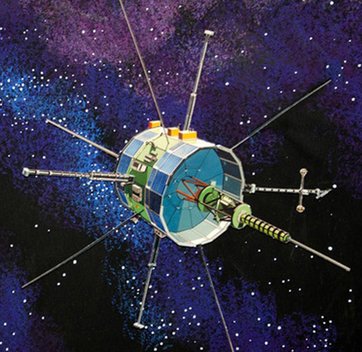
Way back when Jimmy Carter was president, in 1978, the International Sun-Earth Explorer 3 was launched with the mission to investigate solar wind’s interaction with the Earth’s magnetic field. Later, it was renamed the International Cometary Explorer (ICE) to study comets. In September 1985, it passed through the tail of Comet Giacobini-Zinner, and in 1986 it was tasked with the mission to observe Halley’s Comet. During the same year, three rocket burns put it on a course to position it above the moon on August 10, 2014. With the ICE so near, a space shuttle could snatch it and return it to earth, and NASA had this in mind because it planned to donate it to the National Air and Space Museum.
After a few more missions, it was retired in 1997, although it loops around the sun in a 355 day orbit. It will catch up with and pass the Earth this August 2014. But in 1999, the Deep Space Network was upgraded and the transmitters that communicated with ICE were themselves retired, although no one said this to ICE, who continued its end of the bargain by remaining open to communication. It’s sort of like being kept on hold and waiting forever, without anyone telling you that the person who put you there went home a long time ago, leaving you to listen to horrible Kenny G music in the meantime.
And really, that should have been the end of the story. But it isn’t.
Within the confines of yet another decommissioned icon, an entrepreneurial engineer named Dennis Wingo has managed the impossible. He and his team have begun communicating with ICE once more. Mr. Wingo’s company is Skycorp and it’s located in an ex-McDonalds in a decommissioned Navy base that has been repurposed for nonprofits, academia and small technology firms.
A decommissioned satellite linked with a decommissioned burger factory is kind of cool. There’s something very Max Headroom about it. I like it.
Through Mr. Wingo’s determination, a group of engineers, including those who originally worked on the project, plus a crowd funding site RocketHub, they raised approximately $160,ooo to breathe life in the old gal. And NASA’s doing its part too, donating time on its Deep Space Network to help getting ICE going again.
ICE is still doing its job out there and observing solar flares and other phenomena, as was discovered. So there was great optimism to position it over the moon as originally planned, which now requires 400 pulses to place it over the sweet spot. There’s been a few minor setbacks, but if all goes well, Mr. Wingo and his team are all set to pull ICE into a moon gravity-based slingshot into an orbit around the earth, so it can receive instructions for a new mission.
I have to admit that this story has me cheering. Why should there be a whole pile of forgotten and unused satellites and space paraphernalia after NASA and all the world’s other space agencies no longer need them? It’s an excellent opportunity for others, corporations like Skycorp but also universities and even astronomy and engineering clubs to find other purposes for them? Sure, one can say that leaves opportunities for crimes we haven’t even imagined yet. On the other hand, I’m sticking with the belief that a lot of good can come from that zombie named ICE, and its other colleagues out there.
Just imagine the stories that can be dreamed up from this real-life adventure…















 Moon, Stars and Beyond