Archive for the ‘science fiction’ Category

So. You knew it had to happen. Disney steps into the picture et voila! Yet another film squeezed from the franchise. It’s all over the internet, all over the place in the media and if people still gathered around water coolers, the talk would be rife with what’s going on in that faraway galaxy a long time ago.
“Star Wars” is more than just a movie. It’s a way of life.
Its lingo has insinuated itself into our vocabulary. Its characters are our buddies. And come on, who hasn’t wanted to be Darth Vader? Who hasn’t sounded like him during cold season? There are people who get into fistfights over what made more of an impact in our culture: “Star Wars” or “Star Trek” (My answer? Both have).
I’m a purist when it comes to my “Star Wars.” I prefer the unadulterated version, the one I went nuts over in high school. Twenty-something years later when I sat down in the movies to watch the “updated” version, my friends and I, all dedicated “SW” fans, were at first fascinated, then puzzled at the unnecessary add-ons meant to enhance the film. They didn’t.
Especially outrageous was adding to the very end the new and improved Anakin Skywalker, the non-actor Hayden Christensen. Not that the other guy really brought a lot to the role (we just see his cauliflower head at the end), but he pretty much matched the person you saw. HC bears absolutely no resemblance to Darth as he aged. I mean, they didn’t change how Yoda looked, did they?
It is indeed interesting that the original trio of superstars are going to have an actual role. How could they not be included? While no one expects Carrie Fisher to roam around in a skimpy Jabba-Jawdropper skirt and bra, I sure hope they give her a position of importance. That goes for Han Solo, too. Does anyone think they got married? Had kids? Pay a mortgage or deal with unruly teenagers with a drug habit? Or maybe neither of their kids turned out to be a Jedi, inheriting Solo’s traits. Sure, he redeemed himself in the end, but he started off as a ne’er do well in compromising circumstances.
However, I’m hoping everyone cheers for the real hero in this drama, Mark Hamill. He paid a big price to be Luke. He’s every bit of a good actor as the rest of the crew, yet drew the short stick. Forever stereotyped, he developed the Richard Thomas syndrome, forever being attached to a role that everyone loved and no one forgot (RT was John Boy Walton, remember?). Carrie Fisher had a bunch of good roles and went on to become a very respected script doctor. Harrison Ford played yet another franchise character and despite that, still took on many roles, some sci-fi based, others not. Why did Mark get left out in the cold? Did he suffer from Darth’s curse?
Still, I know I’ll be one of those ticket holders standing patiently in line, waiting my turn to see just exactly what “Star Wars VII” has to offer. No, I won’t camp out and swap war stories with the rest of the geeks in line. I will, however, cheer my head off watching the iconic logo flash on the screen to the familiar theme, and scan the storyline roll, while in the back of my head I’ll wonder: what ever happened to Billy Dee Williams?

Okay, I’ll admit it: I had a crush on this guy. I’ll also admit to being, what, 15 at the time too. But in my teenage head, Patrick Duffy…er…Mark Harris had it going on. Strangely, one of my best friends in the universe, Marc Harrison (whose names strangely seemed familiar and made me wonder about where exactly was he from) didn’t think the same way.
Anyway, just look at him: angry, wet, confused. If you saw this guy wash up on the shore, complete with gills and webbed hands/feet, and naked too, wouldn’t you think this was some kind of college frat prank? How’d you react when this being woke up, didn’t know who he was or where he came from? I admit, I’d be scratching my head, too. “Sure, buddy, I know…it’s those Delta Taus again, eh? All right, who put the ‘shroom in your booze?”
Sadly enough, it wasn’t me that found him, since he washed up on California (I think, anyway) and I lived in New Jersey, where other sorts of stuff managed to find their way on our beaches. That honor was left to Dr. Elizabeth Merrill, who discovered him, saw real potential and made him whole again.
And BOY! could he swim! There Mark was, in that weird swimming motion with his hands to his sides, a bit like a jackknife under water. Since I grew up on the ocean, I tried this maneuver regularly, generally managing to get copious amounts of water up my nose (or bang into people).
Mark sure caught the attention of the US Navy and, as the United States government generally does, found a purpose for him. They recruited him to find a lost submarine filled with important people (as if the regular crew didn’t count). After deciding this person has to be the last remaining survivor of Atlantis (which I believed existed under my ocean, but what do I know), the Foundation for Oceanic Research thinks he’s pretty cool too. They offer him a job and although Mark first demurs, he changes his mind and, much to the delight of Dr. Merrill, stays.
Of course, every show worth its salt needs a boo-hiss character, and MFA had Schubert. He was a forward-thinking kind of scientist, largely misinterpreted and ill-understood. Aren’t they all? In his arsenal he had, of all things, giant microwaves to melt polar ice caps. Strangely enough, if Schubert had survived long enough to be around today, he’d realize how unnecessary that instrument of evil is, since they’re melting anyway due to the effects of climate change…unless Schubert is behind this…and the giant microwaves are REALLY the culprit…
Schubert also altered genetics to create a monstrous jellyfish designed to wreak terror on the unsuspecting innocent. That’s a common plot theme now, but in 1977 that was rather amazing. He even devised a weapon to knock out satellites, a common occurrence as well in sci-fi.
Unwittingly foreshadowing the future, Mark meets his twin Billy in a Wild West Town, although Billy’s webbing has been removed. A short time later, Patrick Duffy plays Bobby in that other Wild West town, Dallas. He doesn’t have webbing in this one, but he dies and miraculously appears in the shower. That’s pretty close to washing up on shore and saying you don’t remember who you are or where you came from.
Probably the most shocking thing about MFA is that while it aired in the UK, it beat Dr. Who in the ratings.
What a shame this show with such potential only lived for four movies and 13 episodes. My teenage heart was crushed. Still, I always had in the back of my mind Mark Harris would wash up on my Jersey shore, ready to launch a new adventure.
I’m still waiting…
I’d like to know this: who comes up with the uniforms for all those space missions out there? I mean, once we’re out and about in galaxies afar, does anyone really care whether or not our outfits match? Or that they’re in uniform?
Take, for example, this example:

Space: 1999 publicity shot
The color palate is beige with a touch of red and a slap of mustard, reminiscent of a hot dog bun with ketchup and mustard.
Now, compare it to this:

Star Trek II: The Wrath of Khan publicity shot
This is a riff off of the above, except we’ve gotten rid of the ketchup and replaced it with relish and chafing dish pan.
Both are going for the comfort angle, because, as we all know, traveling in either a ship or moon requires it. Take a closer look at both casts. S:1999 pose as if they own the look; STII gaze embarrassingly off into the distance.


And these two for women: for whose benefit are these impossibly short hemlines? Even sitting’s a chore in these, a constant battle between modesty v. duty. Sure, Kirk’s going to throw down his pen and say, “Say, can you pick that up for me?” as he gives his best lecherous stare. And the hair – if you’re fighting Klingons, who’s got the time to fuss with such an intricate do?

This drove me nuts: why is it open? Does it allow for more comfort, sort of like opening the top button? Does it show that an officer has his guard down, or up during battle and needs to breathe? How do you keep it closed, anyway?

And speaking of dresses, Picard in his literal dress uniform. Note the look of defeated resignation in his face. I’m sure he’s thinking: Magenta? REALLY? This would have been much chicer in grey…

ST: Enterprise publicity shot
Although purple wouldn’t have been my first choice, kudos for at least some consistency in the uniforms. At least T’Pol has coverage, albeit rather snugly. She’s shapely, so she pulls it off well.

STSG: Nemesis publicity shot
Finally, I have to admit, the above is the most professional and utilitarian of all uniforms in the ST series. Why, oh why, didn’t they just go to these in the first place? Guess it takes many tries before you get it right.

There’s always been the element of fantasy in movies. That’s no surprise. It seems to me, though that the whole genre of Science Fiction/Fantasy has really taken Hollywood by the horns and blown out its gates.
Take, for example, the Great Depression. Back then, one went to the movies to moon over Fred and Ginger dressed in ballroom basics in exotic overseas destinations to flaunt their talent on a polished dance floor. The more extravagant the number, the better the attendance. That also coincided with the time of true Hollywood glamour, beautiful men and women showing us they weren’t you, but another league entirely. Though the average American knew they’d probably never be as glamorous as those stars, it offered a measure of comfort to pretend you might be, for a few hours, at least.
Occasionally, there’s be the science fiction film or series taking us to places with strange sounding names and odd looking creatures, all angry and ready to eat us alive. Buck Rogers, starring Buster Crabbe. This 12-part, 1939 series grips one to the edge of one’s seat as the Earth fights Saturn (or is it the other way around?) for all sorts of military and adventure glory. Watch it! https://www.youtube.com/watch?v=iTtc-u3zFGk
I adored Flash Gordon too. Also starring Buster Crabbe, this adventure series had our hero flying around in what appeared to be giant electric razors. Dale Arsdon, the kind-of girlfriend of Flash’s, was one hot babe, while Ming the Merciless somehow never got around to killing Flash, but it wasn’t from lack of trying. He’d come up with some cruel and bizarre ways to bump him off, yet through a clever yet inventive way, Flash’d pull it off, managing to save himself, Dale, and any other perceived innocent deserving to live. It’s totally worth watching Flash Gordon! https://www.youtube.com/watch?v=HZ2HUfD0QSw&list=PLFC968E9E9FA8CBC4
It’s also important to remember that these serials were watched by the very same people that developed some of the finest projects filmed today. Hokey as they might be, they are pretty fun.
Enjoy!

I’ve been reading a bunch of other people’s blogs tonight, and an excellent one, charliejane, has a wide range of subjects that thoroughly discussed all things science fiction, with a slant towards readers and writers of sci-fi. Many participants eagerly join in on all the topics presented, and I even learned a thing or two.
One thing I did notice on the site was the very real question of science behind science fiction. One person who was engaged in a conversation said, “It drives me insane when someone writing space opera gets physics all wrong. It drives me nuts when authors of stories that feature computer hacking don’t know anything about hacking or programming.” That’s a valid point. However, if we’re talking about the future, it’s guaranteed that what exists today regarding hacking and programming isn’t going to be around 40, 60, 80 or 100 years from now.
Jeez, I clearly remember IBM’s cards and the exciting career one could have being a keypunch operator. In 1984, at my first real job that didn’t involve flipping hamburgers, I used an IBM PC jr., which is laughable by today’s standards. I had an “A” drive and a “B” drive, both requiring floppy 5 1/4″ disks. In order to print sideways, I had to put in a separate floppy just for that. And oh, how jealous I was of the resident programmer who had an IBM AT that had – get this – 20K of memory on the hard drive. 20K!
Then, I got a new job in advertising. The agency’s client, among others, was IBM. Since there’s IBM offices worldwide, we needed a way to contact them that didn’t involve staying up all night to make a phone call for a yes or no question. So we had this nifty solution called PROFS. Again, we had a special disk we put in that connected us to the phone line, and we typed up a message that was whisked off to Japan, Australia, Europe – anywhere IBM was located. Several times a day, we’d go and have us a look and retrieve messages. Generally, they’d come the next day, so there was always something in the loop.
You know what they call that technology today? Email. You know what year that was? 1988.
How many of you remember that magical day when the freshly-titled IT guy hooked up a phone line to the back of your computer and you were instantly introduced to the great world beyond your desk? It was 1994 for me, and we had the Internet installed. I had email, too. Netscape was our browser, and we used Webcrawler, Alta Vista and Yahoo! too. There was this button on Yahoo! that said, “Surprise.” One click would take a surfer on a fascinating ride around the internet. I saw plans for plumbing the bathroom, horoscopes, blueberry pie recipes, and all sorts of nifty stuff.
Right along with all of this, there were the evil hackers who learned to take from what the Internet had provided, only to steal and corrupt whatever they could coax their keyboards to type. I dated someone who knew how to do this and back then, it didn’t take much. Today, there’s little that smart kid can’t figure out how to break into.
But in the future?
We know how programming works today and most likely can predict how it’s heading. But there are things we don’t know. My only experience with e-books was watching characters on “Star Trek: Deep Space Nine” read from them. I didn’t know about iPads then. All right, not the best example, but still.
All I’m saying is, true, it’s not a good idea to write about programming and hacking if you don’t know what it is now. But if I lived in 2080, who’s to say what will be the shape of code to come?
Ideas?
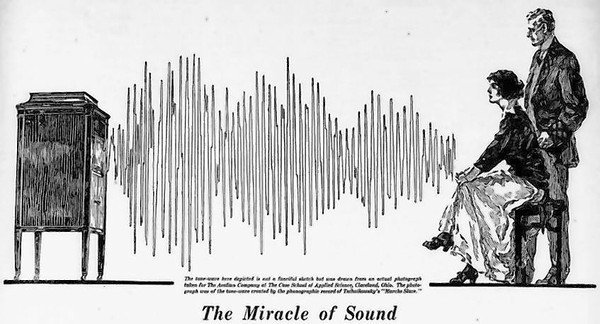
Here’s a mystery for you: How can one recognize a sound if one doesn’t know what one is listening for?
Envision the sound of water dripping. To us, it’s immediately identifiable. A persistent plunk of droplets, often landing in unwanted places. That faucet with the worn valve, a pipe’s joinery weakening, even raindrops plopping a steady rhythm – all instantly recognizable, regardless of different circumstances. It’s water. We know that.
Now imagine that sound broadcast over light-years’ worth of distances. A resident of another galaxy hears it. Perhaps on his or her planet, water evaporates or freezes. Will this off-world listener misinterpret our ambient noises to be a distinct language?
As depicted in the movie, “Contact,” our broadcasts words, laughter, music, applause and other activity drifted out beyond our solar system’s outer reaches. We only know what passes for language here on Earth. How do other life forms communicate? Perhaps applause might not be recognized as having a function. Music might not exist at all. Laughing might be a language all unto itself.
We allege that our off-world companions might exhibit the same traits as we humans do. It’s only natural, since we don’t have any standard method of comparison. Our Earth is filled with a virtual cacophony of sounds, each bearing a unique interpretation, all providing information we need to assess our reaction, if any is necessary. How, then, do we describe to our off-world friend what exactly we are hearing when we cannot communicate the definition of it?
What happens when we hear our first off-world sounds from a habited planet? A friendly gesture might resemble explosions. Our experience tells us we are in danger. Our foreign friend freaks out when charged with guns and bombs, and then what? The Off-Worlder retreats or worse, dies.
Sound waves travel differently given the amount of resistance they encounter. A bell changes its tune as it rises in altitude. Temperature also affects sound. String instruments hate the cold. Drums can be cooperative, although animal skin drumheads shrink or expand with the temperature and humidity.
An off-world sound brought to Earth can lose its characteristics unique to its planet and present an entirely changed audio experience. How to identify a sound never before heard? Good question. I thought about that and wondered how I’d react. I’m curious and I’d investigate. I’d do that, though, only if the sound registers in my ear. If my cat ran off or the neighbor’s dogs started barking like crazy, and nothing was around to set them off, then what? Or if that sound destroyed object like a laser – a highly concentrated,focused beam of sound silently destroyed selected targets, I’d seriously worry.
Sounds like a mystery to me…




 Moon, Stars and Beyond